
Table of Contents
ToggleSheogorath is easily one of the most memorable Daedric Princes you’ll encounter in Skyrim, and that’s saying something when you’re dealing with a roster that includes literal torture enthusiasts and plague lords. His quest, “The Mind of Madness,” is a surreal trip through the broken psyche of a long-dead emperor, complete with reality-bending puzzles and one of the game’s most chaotic rewards. Whether you’re hunting down unique Daedric artifacts or just want to experience one of Skyrim’s strangest questlines, Sheogorath delivers a blend of dark humor, lore callbacks, and genuinely creative gameplay that stands out even a decade after release. This guide breaks down everything you need to know about finding Sheogorath in Skyrim, completing his quest efficiently, and making the most of the Wabbajack, plus the deep lore connections that make this mad god far more significant than he first appears.
Key Takeaways
- Sheogorath in Skyrim is the Daedric Prince of Madness who rules over creativity and unpredictability, and evidence in his dialogue suggests he is actually the Hero of Oblivion transformed into a cosmic entity.
- The Mind of Madness quest is accessible at any level with no combat encounters, making it one of the most approachable Daedric quests—start it by speaking to Falk Firebeard in the Blue Palace and obtaining the Pelagius Wing Key.
- The three core puzzles require using the Wabbajack staff to balance Pelagius’s inner conflicts: equilibrating his Anger and Confidence, neutralizing his Night Terrors, and resolving his Paranoia through targeted blasts.
- The Wabbajack reward is a chaotic staff with unlimited charges and unpredictable effects ranging from transforming enemies into harmless objects to instant kills, making it entertaining for casual play but unreliable for serious endgame combat.
- Sheogorath’s character is enriched by callbacks to Oblivion’s Shivering Isles expansion and a running cheese obsession, with Easter eggs and fourth-wall-breaking humor that reward attentive players throughout the questline.
Who Is Sheogorath in Skyrim?
The Daedric Prince of Madness Explained
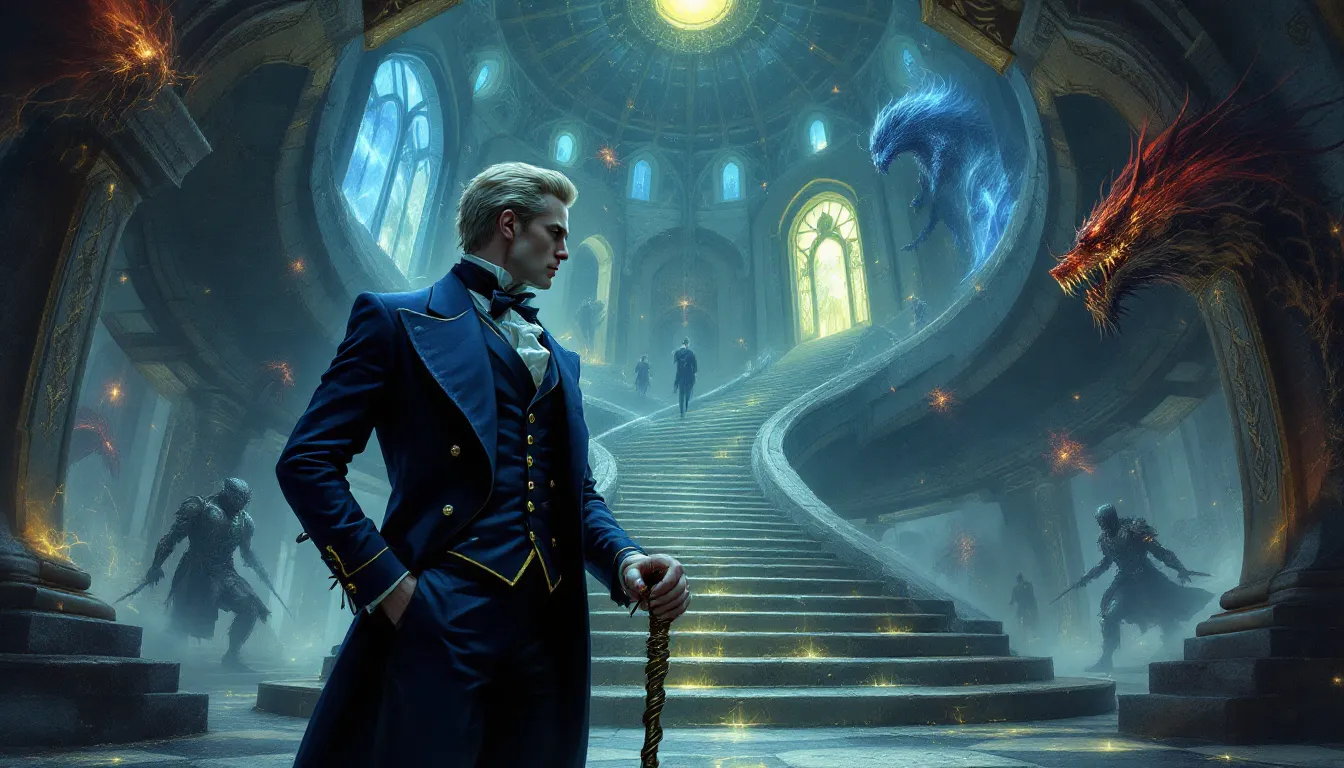
Sheogorath is the Daedric Prince of Madness, ruling over creativity, inspiration, and, naturally, total psychological chaos. Unlike other Daedric Princes who focus on domination, disease, or nightmares, Sheogorath’s domain is unpredictability itself. He embodies both the brilliance of artistic genius and the horror of complete mental collapse. In Skyrim, he appears as an eccentric, sharply dressed figure with a cane, alternating between whimsical humor and unsettling detachment.
His sphere of influence includes mania, dementia, and all forms of madness, from harmless eccentricity to dangerous insanity. Mortals who worship or deal with Sheogorath often find themselves walking a razor’s edge between enlightenment and lunacy. He’s unpredictable, fourth-wall-breaking, and genuinely funny in a way few NPCs in Skyrim manage to pull off.
Sheogorath’s Connection to Oblivion and the Shivering Isles
If you played The Elder Scrolls IV: Oblivion and its DLC The Shivering Isles, you’ll catch some massive implications during Sheogorath’s dialogue in Skyrim. In that expansion, the player character mantles Sheogorath, literally becomes the new Daedric Prince of Madness after the original transforms back into Jyggalag, the Prince of Order.
In Skyrim, Sheogorath makes several references that heavily suggest he is the Hero of Kvatch (Oblivion’s protagonist). He mentions “being there for that whole sordid affair” with Martin Septim, references the Oblivion Crisis, and casually drops details only the Hero of Kvatch would know. It’s one of the most fascinating pieces of continuity in the Elder Scrolls series, your character from the previous game has literally ascended to godhood and now exists as a cosmic entity you’re speaking to. The confirmation is subtle enough to feel earned rather than exposition-dumped, which is peak Bethesda environmental storytelling when they nail it.
How to Find and Start the Sheogorath Quest
Locating the Abandoned Pelagius Wing
The quest “The Mind of Madness” starts in Solitude, Skyrim’s capital city perched on the northwestern coast. Head to the Blue Palace where Jarl Elisif holds court. Once inside, you need to locate the Pelagius Wing, a closed-off section of the palace that’s been abandoned for years.
You’ll encounter either Falk Firebeard (the jarl’s steward) or Erdi (one of the palace servants) discussing strange sounds coming from the sealed wing. Talk to Falk about the Pelagius Wing, and he’ll give you the quest to investigate. He’ll hand you the Pelagius Wing Key, which unlocks the door on the palace’s second floor.
If you miss the initial conversation, you can still trigger the quest by asking Falk directly about “Pelagius’s Wing” or by attempting to access the locked door yourself, which prompts dialogue.
Requirements and Prerequisites
There are no level requirements or prerequisite quests for “The Mind of Madness.” You can start it as early as level 1 if you head straight to Solitude. That said, the quest itself involves no combat whatsoever, it’s entirely puzzle-based, so character build doesn’t matter at all.
You don’t need any specific items, skills, or faction membership. Just get to Solitude, talk to Falk Firebeard, grab the key, and you’re good to go. This makes it one of the most accessible Daedric quests in the game, especially compared to ones like Boethiah’s Calling that require you to be level 30 or sacrifice a follower.
The Mind of Madness Quest Walkthrough
Entering Pelagius’s Mind
Once you unlock the Pelagius Wing, head inside and make your way through the dusty, cobweb-filled hallways. You’ll find the corpse (or rather, the resting place) of Pelagius the Mad, also known as Pelagius Septim III, one of the most infamous emperors in Tamrielic history. Approach his remains, and Sheogorath himself appears in a flash of dramatic flair.
After some entertaining banter, he’ll mistake you for someone else, offer you cheese, and ramble about the “Wabbajack”, he transports you into Pelagius’s mind. You’re now inside a surreal dreamscape where reality doesn’t quite follow the normal rules. Sheogorath tasks you with helping Pelagius overcome his inner demons (literally) so the mad emperor can finally rest and Sheogorath can leave this “vacation” he’s been stuck on.
You’ll receive the Wabbajack, a staff that transforms targets randomly, to help solve the upcoming puzzles. Don’t worry, you get to keep it after the quest.
Solving the Haunted Dreamscape Puzzle
The first area you encounter is the Haunted Dreamscape, where two spectral figures face off on opposite sides of an arena: Pelagius’s Anger and Pelagius’s Confidence. Your goal is to balance the fight by making them roughly equal in strength.
Use the Wabbajack on whichever side is winning. If Anger is dominating, blast it with the staff until it shrinks or weakens. If Confidence is losing, hit Anger again. The Wabbajack randomly transforms targets, sometimes they’ll become smaller, sometimes they’ll turn into chickens or sweetrolls (yes, really). Keep zapping until both figures are similar in size and the fight ends in a draw.
Once balanced, the arena disappears, and Sheogorath acknowledges your success with his typical dry wit.
Completing the Night Terrors Challenge
Next up is Pelagius’s Night Terrors. In this section, Pelagius is asleep in a massive bed while a wolf, a bandit, and a Hagraven lurk in the shadows, representing his fears. But, you’re tiny, like, action-figure tiny, so direct confrontation isn’t an option.
Your job is to use the Wabbajack on the enemies to neutralize them. Blast the wolf, the bandit, and the Hagraven in turn. Each shot from the staff will transform them into something harmless, sheep, a goat, or just make them vanish entirely. There’s no specific order: just keep firing until all three threats are dealt with.
Once Pelagius’s fears are eliminated, he can finally sleep peacefully, and the dreamscape shifts again. Many players remember this section specifically because of the absurd scale shift and the fact that you’re essentially playing pest control inside someone’s nightmare.
Fixing Pelagius’s Paranoia
The final challenge is Pelagius’s Paranoia, where you find two versions of Pelagius sitting at opposite ends of a banquet table: Pelagius the Suspicious (paranoid, anxious) and Pelagius the Tormented (confident but tormenting the other). Between them are servants, Anger and Self-Doubt, whispering negative thoughts.
Your goal is to shoot the servants and the tormenting Pelagius with the Wabbajack to break the cycle. Target the Anger and Self-Doubt attendants first, they’ll disappear after a shot or two. Then hit Pelagius the Tormented to stop him from bullying his other self.
The puzzle represents Pelagius’s internal conflict and self-destructive thought patterns. Once you’ve neutralized all the negative influences, the scene resolves, and Sheogorath reappears to congratulate you. He’s satisfied that Pelagius can finally move on, and he rewards you before sending you back to the mortal plane.
Sheogorath’s Reward: The Wabbajack
What the Wabbajack Does
The Wabbajack is a Daedric artifact staff that fires a beam of chaotic magic with completely random effects. When you hit an enemy with it, anything can happen:
- They might transform into a chicken, sweetroll, or pile of coins
- They could instantly die
- They might turn into a Dremora that fights for you temporarily
- They could be healed instead
- They might explode into a shower of gold
- In rare cases, they’ll just shrug it off entirely
The Wabbajack has unlimited charges, it never runs out, but it does have a cooldown between shots. It’s essentially pure RNG in staff form, which makes it wildly unreliable for serious combat but hilarious for messing around.
Best Ways to Use the Wabbajack in Combat
Let’s be honest: the Wabbajack is more of a novelty weapon than a serious endgame tool. That said, it has some niche uses:
- Crowd control chaos: In large fights, the unpredictability can work in your favor. Turning a high-level enemy into a chicken gives you breathing room.
- Low-level enemy deletion: It occasionally one-shots weaker foes, making it decent for cleaning up bandits or basic wildlife.
- Entertainment value: If you’re streaming or just screwing around, few things beat turning a dragon priest into a sweetroll.
The biggest downside is inconsistency. You can’t rely on it when you need guaranteed damage output, which is why most effective combat builds stick to conventional weapons and spells for serious encounters. But if you’re doing a chaotic playthrough or want to add some unpredictability to your tactics, the Wabbajack delivers exactly that.
Unique Effects and Hidden Transformations
The Wabbajack has a surprisingly deep pool of potential transformations, and dataminers have found dozens of possible outcomes coded into the staff. Some of the rarer effects include:
- Transforming enemies into rabbits or mudcrabs
- Summoning a hostile Dremora that attacks everyone, including you
- Turning the target invisible temporarily
- Creating a spectral duplicate of the enemy that may or may not be hostile
One particularly fun interaction: if you use the Wabbajack on a transformed enemy (like one you already turned into a chicken), you can sometimes re-roll the effect and get a different outcome. This means you can technically keep spamming it on the same target until you get the result you want, or until they die from one of the random instant-kill procs.
There’s also an Easter egg where using the Wabbajack on certain NPCs during specific quests can yield unique dialogue or outcomes, though Bethesda patched some of the more game-breaking exploits in later updates.
Sheogorath’s Lore and Significance in Elder Scrolls
The Madgod’s Role Across the Elder Scrolls Series
Sheogorath has been a recurring figure since The Elder Scrolls II: Daggerfall, where he first appeared as one of the Daedric Princes players could interact with. In Morrowind, he had a minor quest where he asked the player to rain burning dogs from the sky onto a settlement (yes, seriously). But it was Oblivion’s Shivering Isles expansion that turned him into a fully realized character with depth, humor, and tragic undertones.
In that DLC, players learned that Sheogorath is actually a cursed form of Jyggalag, the Daedric Prince of Order, so powerful that the other Princes banded together to transform him into his opposite: madness. At the end of every era, Jyggalagg breaks free during the “Greymarch” and destroys the Shivering Isles, only for Sheogorath to reform and rebuild.
The player’s intervention in Shivering Isles breaks this cycle by mantling Sheogorath, allowing Jyggalag to finally remain free. This means there’s now a “new” Sheogorath, the Hero of Kvatch, who has taken on the mantle and role permanently. When comparing race-specific roleplaying choices, this kind of cosmic transformation is unmatched in scope.
Why Sheogorath Might Be the Hero of Oblivion
The evidence is pretty overwhelming if you pay attention to Sheogorath’s dialogue in Skyrim. He mentions:
- Being present during the Oblivion Crisis
- Knowing Martin Septim personally
- Specific events that only the Hero of Kvatch witnessed
- The “Greymarch” and how “I was there for that whole sordid affair”
This isn’t just fan theory, it’s heavily implied canon. The Hero of Kvatch completed the Shivering Isles questline, became Sheogorath, and 200 years later (the time gap between Oblivion and Skyrim), they’re still the Daedric Prince of Madness. It’s a brilliant bit of continuity that rewards long-time fans without alienating new players who might not catch the references.
Some lore enthusiasts debate whether the mantling was permanent or if the Hero eventually “became” Sheogorath entirely, losing their mortal identity. Based on the dialogue, it seems like they’ve fully embraced the role, fourth-wall-breaking humor included. Resources like IGN’s Elder Scrolls lore breakdowns have explored this transformation in detail, cementing it as one of the series’ most significant character arcs.
Tips for Completing the Quest Efficiently
Common Mistakes to Avoid
The Mind of Madness quest is pretty straightforward, but a few things can trip up players:
- Not listening to Sheogorath’s hints: He actually tells you what to do for each puzzle if you pay attention to his dialogue. Skip it, and you might waste time experimenting.
- Trying to fight enemies in Pelagius’s mind: There are no actual combat encounters in this quest. If you see something hostile, the Wabbajack is the solution, not your sword or spells.
- Missing the Wabbajack shots: The staff has decent range, but if you’re too far away or aiming poorly, shots can miss. Get reasonably close before firing.
- Overthinking the puzzles: Each challenge has a simple solution, use the Wabbajack on the obvious targets. Don’t try to find hidden mechanics or complex strategies that aren’t there.
One occasional bug: sometimes the quest won’t progress if you fast-travel or leave Pelagius’s mind mid-puzzle. If that happens, reload a recent save. Autosaves usually kick in at each puzzle transition, so you won’t lose much progress.
Optimal Character Builds for This Quest
Honestly? It doesn’t matter. The Mind of Madness has zero combat, no skill checks, and no character build requirements. You could be a level 1 pacifist or a level 80 legendary warrior, the quest plays out exactly the same.
That said, if you’re planning to use the Wabbajack afterward, keep in mind:
- It scales with your level but has no damage stat, it’s all about the random effects
- Magicka cost is negligible since it’s a staff, not a spell
- No perks in Destruction or other magic trees affect its performance
Basically, grab it on any character for the novelty factor. Stealth archers won’t get much combat mileage out of it, but two-handed berserkers might enjoy the chaos. If you’re following guides like those on Game8’s Skyrim build database, the Wabbajack usually falls into the “fun but not meta” category.
Easter Eggs and Hidden Details in Sheogorath’s Quest
Bethesda packed this quest with subtle callbacks and Easter eggs that reward attentive players:
- The cheese obsession: Sheogorath’s fixation on cheese is a running gag from Oblivion, where he had an entire dialogue tree about cheese wheels and cheese-based madness.
- “Do you mind? I’m busy doing the fishstick”: One of his opening lines is a nonsensical non-sequitur that became a fan-favorite meme.
- Pelagius the Mad’s real history: Pelagius Septim III was an actual emperor in Elder Scrolls lore, known for extreme paranoia and mental illness. The quest’s depiction of his inner demons mirrors historical accounts from in-game books.
- The Wabbajack’s name: It’s derived from Lewis Carroll’s “Jabberwocky” poem, fitting Sheogorath’s Alice in Wonderland-esque surrealism.
- Sheogorath’s outfit: His clothing is nearly identical to his appearance in Oblivion, complete with the cane and fine suit, a rare visual consistency for a series that often reimagines Daedric Princes between games.
- “You’ve made it. Mortal. I have been waiting for, ” interruption: His opening monologue gets cut off mid-sentence, playing into the chaotic, fourth-wall-aware humor that defines his character.
If you stick around after completing the quest and try talking to Sheogorath again, he’ll dismiss you with new one-liners, some of which reference other Daedric Princes or obscure lore details. Speedrunners often skip these, but they’re worth hearing at least once.
Conclusion
Sheogorath’s quest stands out as one of Skyrim’s most creative and memorable experiences, blending dark humor with genuinely clever puzzle design and rich lore connections. Whether you’re in it for the Wabbajack, the callbacks to Oblivion, or just the sheer absurdity of the dreamscape sequences, The Mind of Madness delivers a refreshing break from the usual “go here, kill this” structure that dominates most Daedric quests. The fact that it’s accessible at any level and requires zero combat makes it perfect for any playthrough, and the Wabbajack itself, while not endgame-viable, remains one of the most entertaining tools in the game. If you haven’t tackled this quest yet, or if you’re revisiting Skyrim in 2026 for another playthrough, make sure Sheogorath’s madness is on your to-do list. Just don’t expect him to make much sense along the way.


